

Steps to take to prepare
When preparing for your hospital stay, there are several important factors to consider. This guide provides all the necessary information to help you plan and ensure a smooth experience, from what to bring with you to understanding fasting requirements. Additionally, we offer advice for patients of all ages, including children, to ease any concerns and make the stay more comfortable.
It is essential to contact your insurance provider to confirm your coverage and clarify any excesses or shortfalls. Some policies may require an excess payment upon arrival, which is a contribution you pay towards your insurance claim. This is a contractual arrangement between you and your insurer, and the hospital cannot intervene. Ensure you understand what your insurance covers, and be prepared to pay any charges that are not included in your policy.
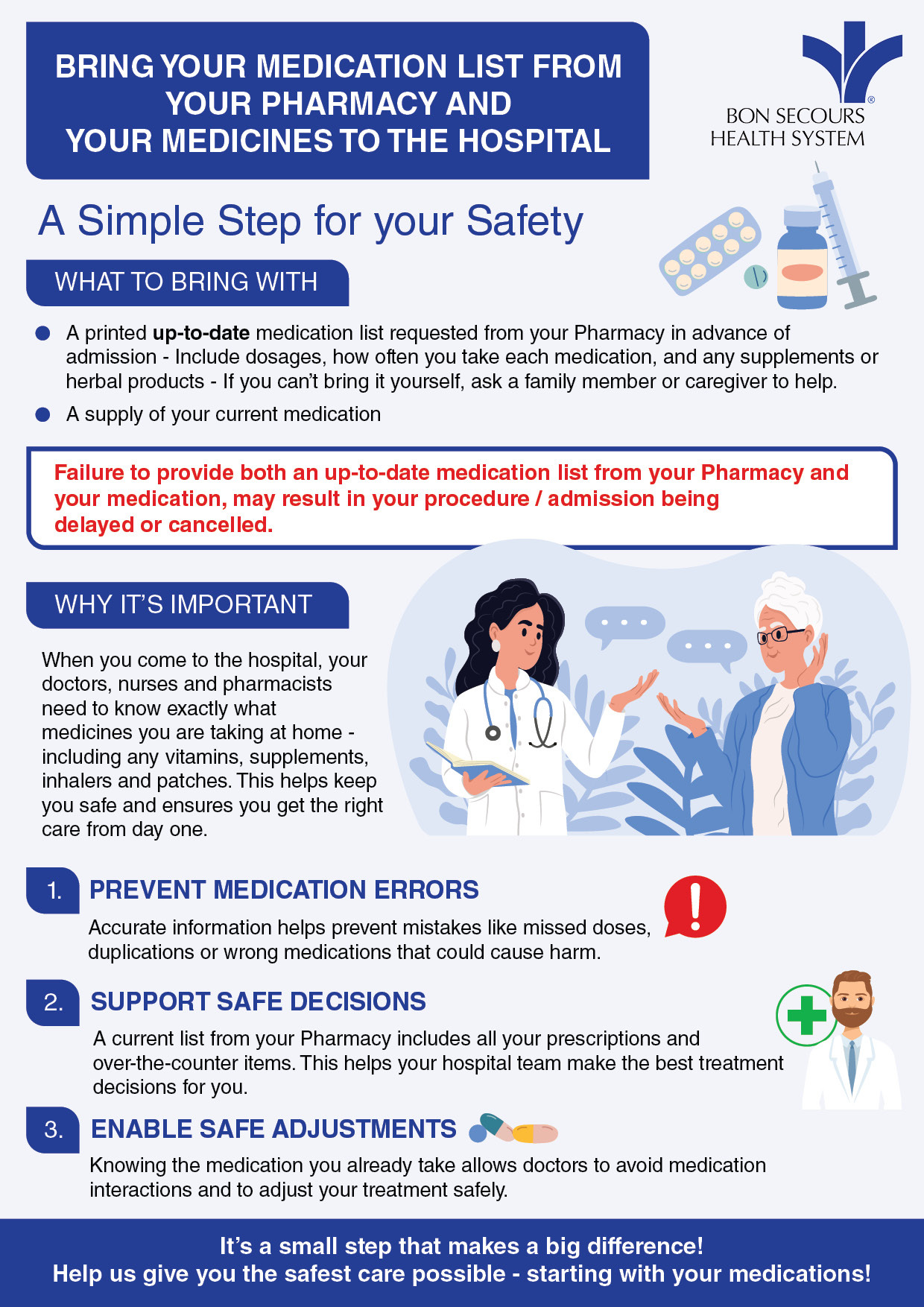
You must bring with you:
- A printed up-to-date medication list requested from your Pharmacy in advance of admission. This should include dosages, how often you take each medication, and any supplements or herbal products. If you can't bring it yourself, ask a family member or caregiver to help.
- A supply of your current medication, which could include prescription medications, vitamins, food supplements, complementary medicines, herbal remedies, or nicotine replacements
Note: Failure to provide both an up-to-date medication list from your Pharmacy and your medication may result in your procedure / admission being delayed or cancelled.
Why it's important:
When you come to the hospital, your doctors, nurses and pharmacists need to know exactly what medicines you are taking at home, including any vitamins, supplements, inhalers and patches. This helps keep you safe and ensures you get the right care from day one.
- Prevent medication errors – Accurate information helps prevent mistakes like missed doses, duplications or wrong medications that could cause harm.
- Support safe decisions – A current list from your Pharmacy includes all your prescriptions and over-the-counter items. This helps your hospital team make the best treatment decisions for you.
- Enable safe adjustments – Knowing the medication you already take allows doctors to avoid medication interactions and to adjust your treatment safely.
The hospital allocates accommodation based on booking details from your consultant’s secretary. While we strive to meet all requests, requested accommodation may not always be available. If you have specific preferences, please discuss them with the hospital before admission.
To ensure your comfort during your stay, we recommend bringing the following items:
- Nightwear, dressing gown, and non-slip slippers
- Toiletries (toothbrush, toothpaste, soap, etc.)
- Change of clothing for after your procedure
- Personal items like glasses, hearing aids, or walking aids
- Contact details of your next of kin
- A small amount of cash, as there is no ATM on-site
For children, it’s helpful to bring a favourite toy, blanket, or other comfort items.
What Not to Bring
We recommend that you do not bring:
- Valuables or jewellery
- Large amounts of cash
- Electrical equipment (unless medically necessary)
- Tobacco products, alcohol, or illegal substances
- Food from outside the hospital
Footwear and Clothing
Patients are advised to bring well-fitting slippers or shoes with proper support (not slip-on or backless varieties). This is especially important for patients undergoing lower limb surgery or those at risk of falls. Additionally, dressing gowns and nightdresses should not extend below mid-calf to prevent tripping, especially when using crutches or other walking aids.
If your procedure requires fasting, this means you must not eat or drink anything, including water, after the time specified by your consultant. Failing to fast as instructed could result in the cancellation of your procedure.
For morning surgeries, you can eat until midnight the night before and drink clear fluids (e.g., water or flat 7UP) until 7:00 a.m.
For afternoon surgeries, you can eat a light breakfast before 7:00 a.m. and drink clear fluids until 11:00 a.m.
Always follow your consultant's instructions on fasting to ensure a safe and smooth procedure.
During your stay, you will have access to several facilities to enhance your comfort:
- Each room is equipped with a television offering a range of cable channels.
- A telephone is provided at your bedside, with charges added to your account for calls made.
- A nurse call system is installed for easy communication with nursing staff, which can be activated from your bedside or bathroom.
- Newspapers and magazines can be supplied on request and charged to your account.
A hospital visit can be a challenging experience for children and their families. To make the stay as stress-free as possible, it’s important to prepare your child for what to expect and bring along essential items to help them feel comfortable.
How to Prepare Your Child
Clear and honest communication is key to helping your child feel secure about their hospital stay. Here’s how you can approach it:
- Explain the hospital visit in simple terms that your child can understand, depending on their age. Let them know that the doctors and nurses are there to help them get better.
- Reassure your child that you will be there with them, and that after their treatment, they will return home. Be calm and positive when discussing their hospital stay.
- Prepare your child for any procedures they might undergo. For example, if they are having surgery, explain that the doctor will make sure they don’t feel any pain, but it's important not to go into unnecessary detail that might cause anxiety.
Age-Specific Preparation
- Under 3 years old: A couple of days before admission is usually enough time to explain to your child that they are going to the hospital to get better and will come home afterward. Keep the explanations simple and repeat them to reassure your child.
- Ages 4-6 years: Start talking to your child about the hospital visit 3-7 days in advance. This allows them time to ask questions. Answer them in clear, simple language.
- Ages 7 and over: Have an open discussion a few weeks before the hospital visit. Provide more detailed information about what will happen and allow your child to ask questions and express any concerns.
What to Bring for Your Child
Make sure to pack a few essential items to ensure your child feels comfortable during their stay:
- Night clothes and a washing kit.
- Light day clothes for recovery.
- A favourite blanket or toy to provide comfort.
- Any necessary soothers or bottles if your child uses them.
- Simple books or activities to help pass the time.
Fasting for Your Child's Surgery
If your child is scheduled for surgery, fasting is required to ensure their safety during anaesthesia. The guidelines are:
- For morning surgery: Your child can eat until midnight the night before and drink clear fluids (water, flat 7UP) until 7:00 a.m. No food or drink is allowed after 7:00 a.m.
- For afternoon surgery: Your child can have a light breakfast before 7:00 a.m. and drink clear fluids until 11:00 a.m. After 11:00 a.m., no further food or drink should be given.
What You Will Be Expected to Do
During your child’s hospital stay, you will play an important role in their care. You will be free to:
- Help your child with washing, dressing, and toileting as needed.
- Support your child during medical examinations and procedures, offering reassurance and comfort.
- Take short breaks if necessary, but always inform your child when you’ll be leaving and returning to help ease any anxiety.
Important Tips for Parents
- Do check with your consultant if your child needs to fast before surgery or certain tests.
- Do inform the hospital if your child has recently been ill or in contact with an infectious disease (e.g., chickenpox, head lice, etc.).
- Do bring your child’s regular medications (e.g., for asthma) to ensure availability during the hospital stay.
- Do not mislead your child about any procedures. Be honest and clear without causing unnecessary alarm.
Visiting and Security
Parents and guardians are welcome to stay with their child throughout their hospital stay. For other visitors, the hospital has specific visiting hours to ensure your child gets adequate rest:
- Visiting hours are 2:00 p.m. to 4:00 p.m. and 5:30 p.m. to 7:30 p.m..
- Only two visitors are allowed with your child at a time. After 7:30 p.m., only parents/guardians may stay.
- If a visitor is unwell, it is advised they avoid visiting to prevent the spread of infection.
For your child's safety, access to the ward is restricted. Visitors will need to use the intercom system to enter, and your child must remain within the unit unless attending a test or procedure.
If you have a broken skin area, live in a nursing home, or are a known M.R.S.A. carrier, it’s crucial to inform your consultant’s secretary or the hospital prior to your admission. This will allow us to take the necessary precautions, such as providing a private room and specific infection control measures, to protect both you and other patients.
Please also inform the admissions staff if you have been a patient at this hospital before, whether as an inpatient or outpatient. This helps avoid duplication of records and ensures your care is well-documented.
Before any procedure, you will need to give informed consent. This means you must understand the benefits, risks, and alternatives involved in your treatment. In Ireland, patients aged 16 or older can provide their own consent for medical or dental treatments. If you have any questions about your treatment, please feel free to ask your consultant.
By following this guide, you can ensure that you are well-prepared for your stay at the hospital. Should you have any concerns or questions, our staff is always available to assist you.