
What is the Radiation Dose on the radiology report?
Irish legislation (SI 256 of 2018) requires that “information relating to patient exposure forms part of the report of the medical radiological procedure.” This legislation is linked below.
https://www.irishstatutebook.ie/eli/2018/si/256/
What is ionising radiation?
Ionising radiation is a type of energy which can remove a bound electron from an atom, thus creating an ion. X-rays are a type of ionising radiation. Ionising radiation comes from many natural sources, including radon from the ground, small amounts in food, and cosmic radiation. For further information on naturally occurring ionising radiation please see https://www.epa.ie/environment-and-you/radiation/radiation-exposure-and-your-health/your-radiation-exposure/
In Ireland, medical exposures are responsible for 10.4% of our average radiation exposure. The remaining 89.6% comes from the natural sources described above.
What is Radiation Dose?
There are many ways in which radiation dose can be described. The figure given in your report is the amount of radiation emitted from the X-ray machine, this is also known as Absorbed Dose. Examples of the dose in the report for an X-ray and CT and what the letters mean are given below.

Is this amount of radiation harmful?
Prior to performing a study which involves exposing a patient to ionising radiation, the practitioner will have viewed the referral and judged that the benefits from performing the examination outweigh any small risk involved. The amount of radiation used depends on the type of examination.
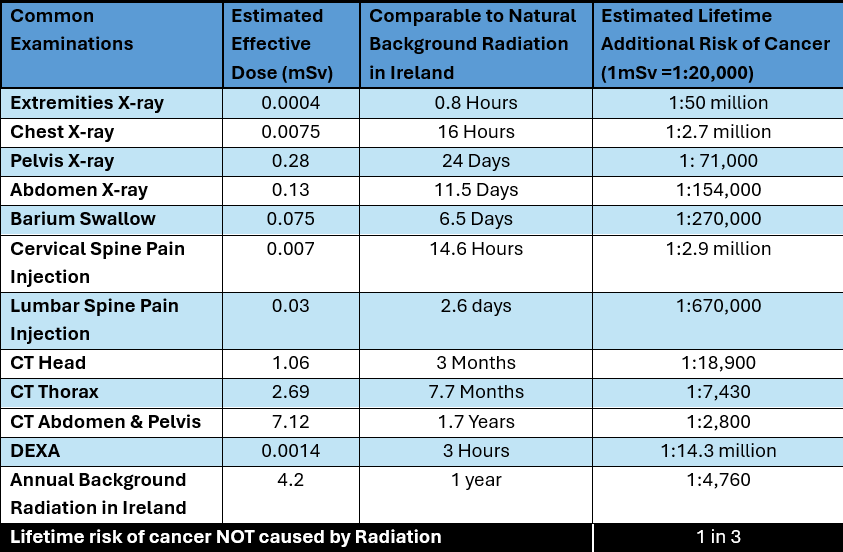
More radiation is needed to create useful images to answer certain questions and for some areas of the body. However, the amounts of radiation used in medical imaging are many thousand times too low to produce immediate harmful effects. There is however a very slight increase in the chance of developing cancer many years, or even decades after the exposure. This risk represents a very small addition to the 1 in 3 chance we all have of getting cancer.
The table below gives the approximate increase in risk from average radiation doses used in medical imaging.
Is the Radiation Dose on the Radiology report always correct?
The process of putting the Radiation Dose on the report involves transferring information between several programs. This process is correct in greater than 99% of studies. There are times when the dose will not be correct. These are listed below:
- When we have performed 2 studies together – normally done to reduce the overall radiation or medications administered to the patient.
- In this case the total radiation dose from all the reports will correctly represent the dose from all the studies. Some reports may show 0 dose while another shows the total dose.
- When the radiation dose received and that on the report are different, we will issue a new report to correct the radiation dose. This will not affect the result of your study (Radiologist’s report).
- When the systems responsible for transferring information on dose are offline resulting in no dose showing in your report. These doses are always recorded in the radiology department and can be obtained by contacting [email protected] if required
If you have concerns about the Radiation Dose on your report, please email [email protected]